- ConnectUM
- Posts
- UM Leads Innovation Drive to Boost Mindanao’s Research, Sustainability, and Global Partnerships
UM Leads Innovation Drive to Boost Mindanao’s Research, Sustainability, and Global Partnerships

Conrado Jr. B. Panerio
October 01, 2025
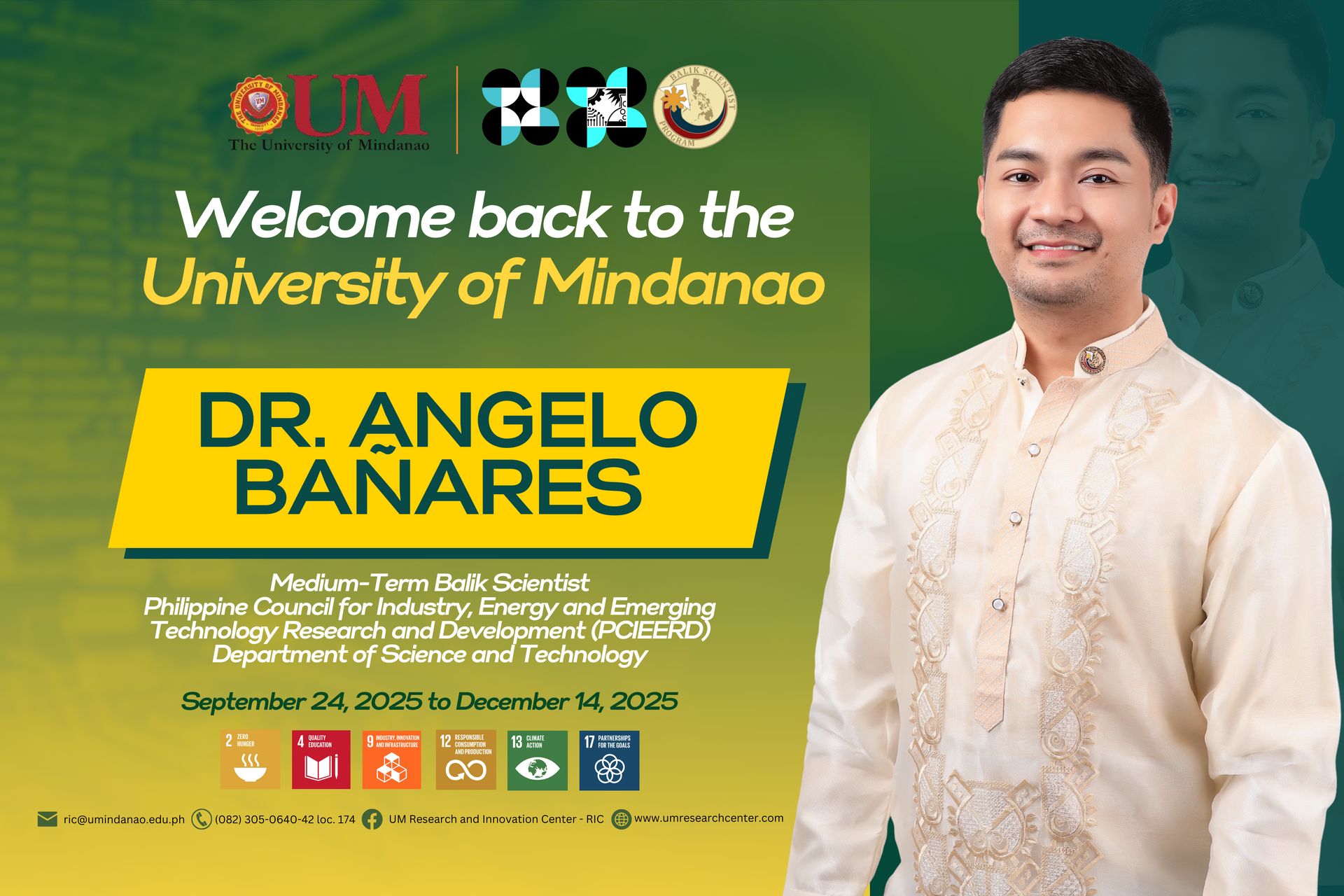
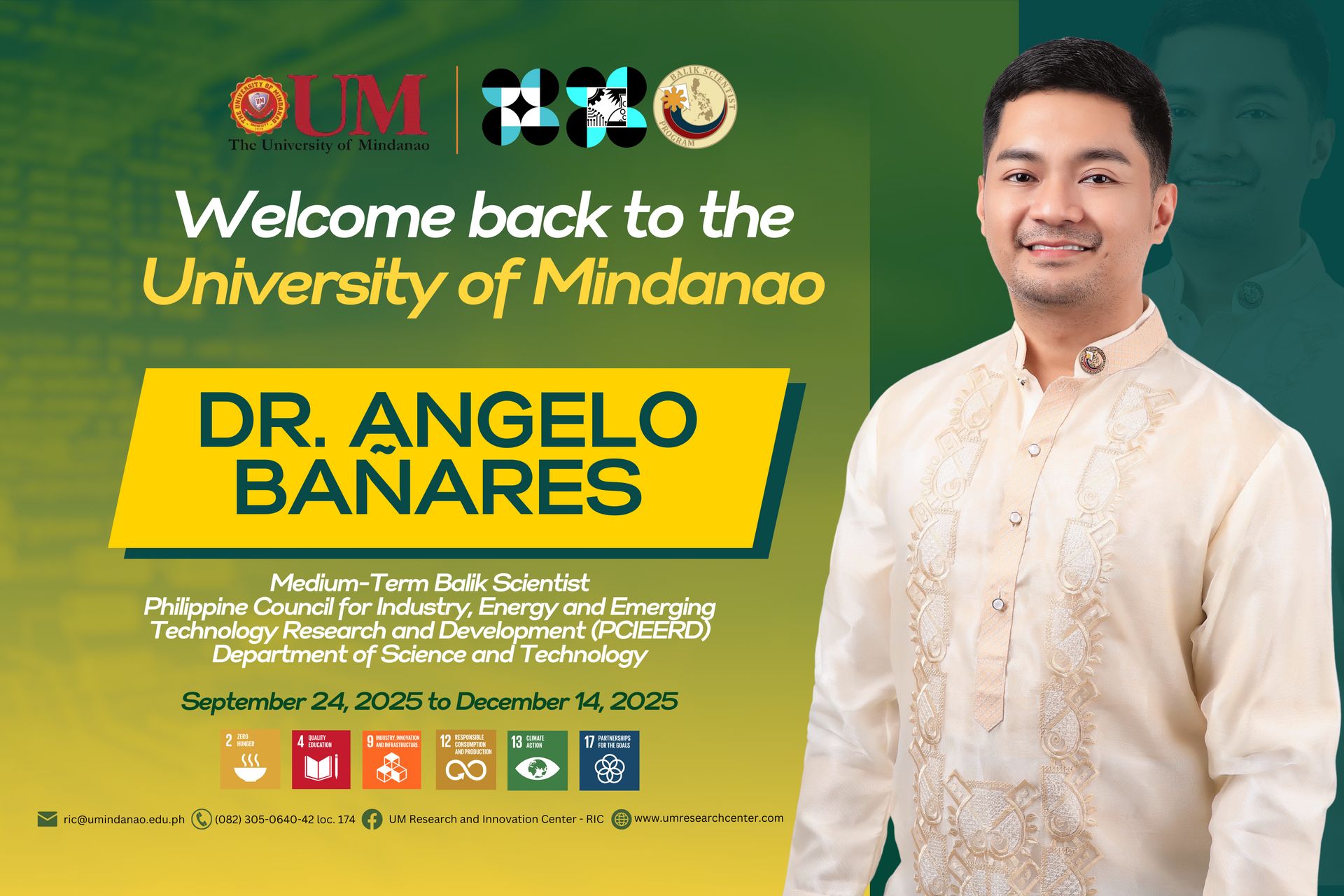
Davao City, Philippines - The University of Mindanao has welcomed back Dr. Angelo B. Bañares as a Medium-Term Balik Scientist under the Department of Science and Technology – PCIEERD Balik Scientist Program. Dr. Bañares will be based at UM, where the bulk of his work will be carried out through the Center of Green Nanotechnology Innovations for Environmental Solutions (CGNIES) and the UM Biomolecular Engineering Laboratory (UMBEL) – first-of-its-kind facilities in the Mindanao Islands. His engagement runs from September 24, 2025, to December 14, 2025.
A homegrown researcher with international experience, Dr. Bañares specializes in metabolic engineering and synthetic biology. He has held postdoctoral positions at prominent research institutions, including the Micalis Institute (INRAE) in France and Myongji University in South Korea, bringing both advanced technical expertise and global research networks to UM.
Under his medium-term engagement, Dr. Bañares will lead the implementation of several projects housed at CGNIES and UMBEL. These initiatives are expected to focus on sustainable, bio-based solutions that address regional priorities – from climate-adaptive agricultural interventions to value-added bioprocessing of local resources.
This engagement aims to develop bio-based agricultural innovations that align with SDG 2 – Zero Hunger through improved food security, and SDG 4 – Quality Education by equipping students and researchers with advanced training and research opportunities to strengthen academic growth, SDG 9 – Industry, Innovation, and Infrastructure, which seeks to enhance research infrastructure in Mindanao through UMBEL and CGNIES, and SDG 12 – Responsible Consumption and Production by promoting sustainable biotechnology that supports waste reduction and resource efficiency. It also supports SDG 13 – Climate Action by generating science-based solutions that help communities adapt to the impacts of climate change, and SDG 17 – Partnerships for the Goals by fostering collaborations among local institutions, government, and international resource networks.